October 8, 2026
Drones in Controlled Airspace — Preparing for the Next Decade
Drone proximity events at major airports have surged since 2024, causing high-profile FIR-level disruptions at Heathrow, Frankfurt, Munich, Dubai and Riyadh in the past year.
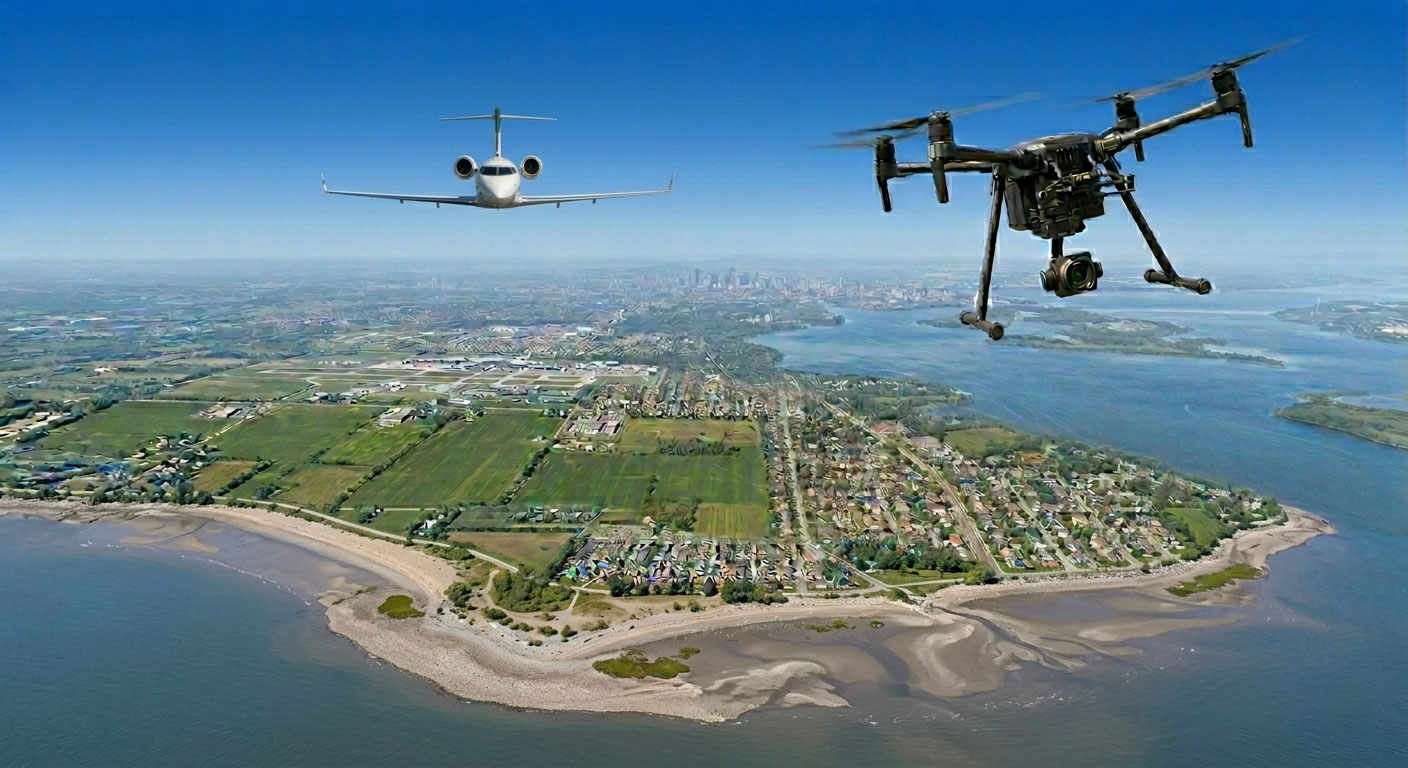
Drone proximity events at major airports have risen sharply since 2024, with high-profile FIR-level disruptions at Heathrow, Frankfurt, Munich, Dubai and Riyadh in the last twelve months alone. For business aviation, the implications cut two ways. We share the affected approach and departure phases with commercial traffic, and our flexibility around alternates and timing means our crews are more likely to be airborne when an airport closes than the scheduled-airline counterparts.
The risk profile is concentrated in the low-altitude phases — final approach, initial climb, and visual circuit work — where avoidance margins are smallest and the consequences of a bird-strike-equivalent encounter are most severe. Crews also need to handle the secondary effects: FIR closures, holding-fuel pressures, divert decisions under time and weight constraints, and the public-information environment that follows.
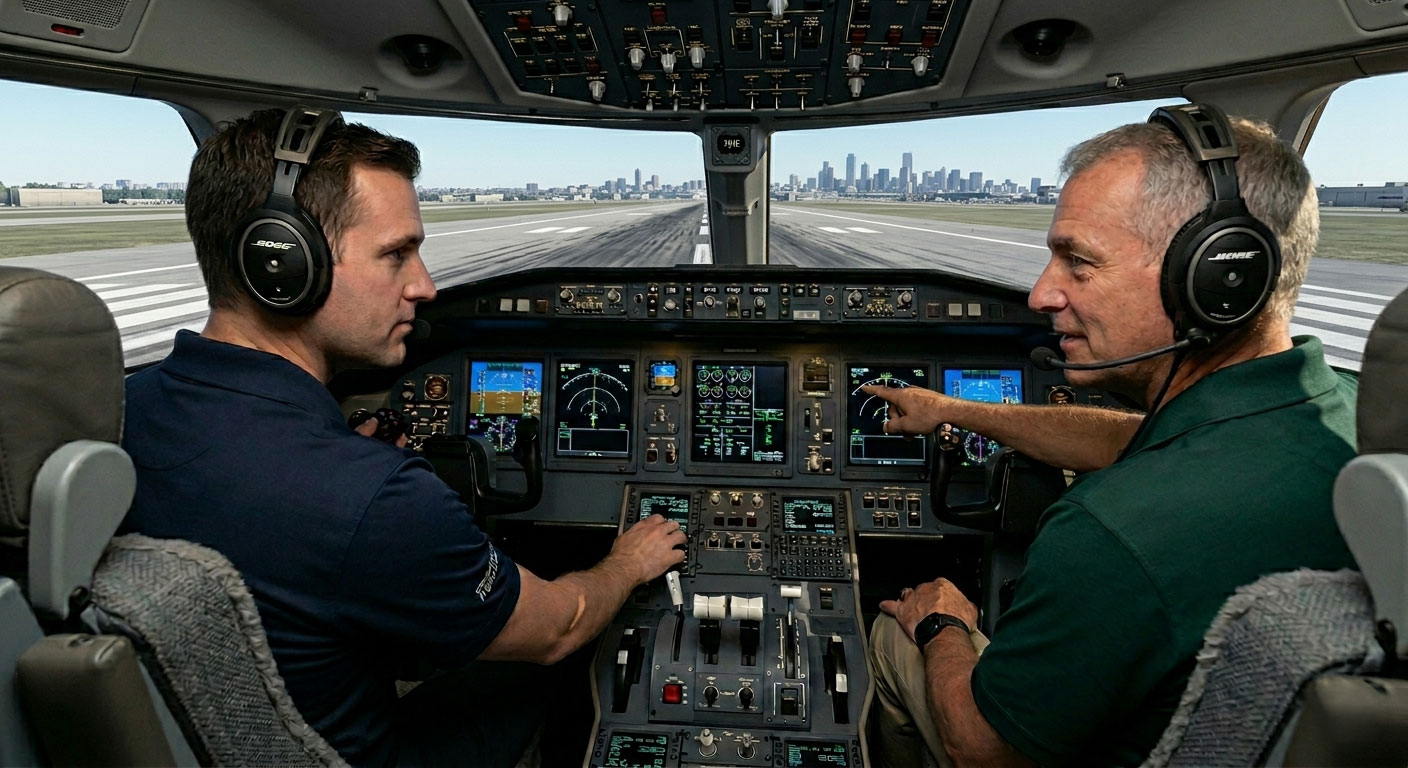
What this requires from a training point of view is scenario rehearsal in conditions that resemble the real event — not a slide deck. AeronautX is integrating drone-encounter and FIR-closure scenarios into the LOFT phase of recurrent on the Challenger and across the wider fleet, with the FFS allowing operators to inject the threat at the point in the flight that matters most for their typical mission. Decision-making, crew coordination, and the divert calculus can all be practised in a setting that closes the gap between awareness and capability.
Drones are not a tomorrow problem. They are already shaping the way a business aviation crew flies. The training has to keep pace.