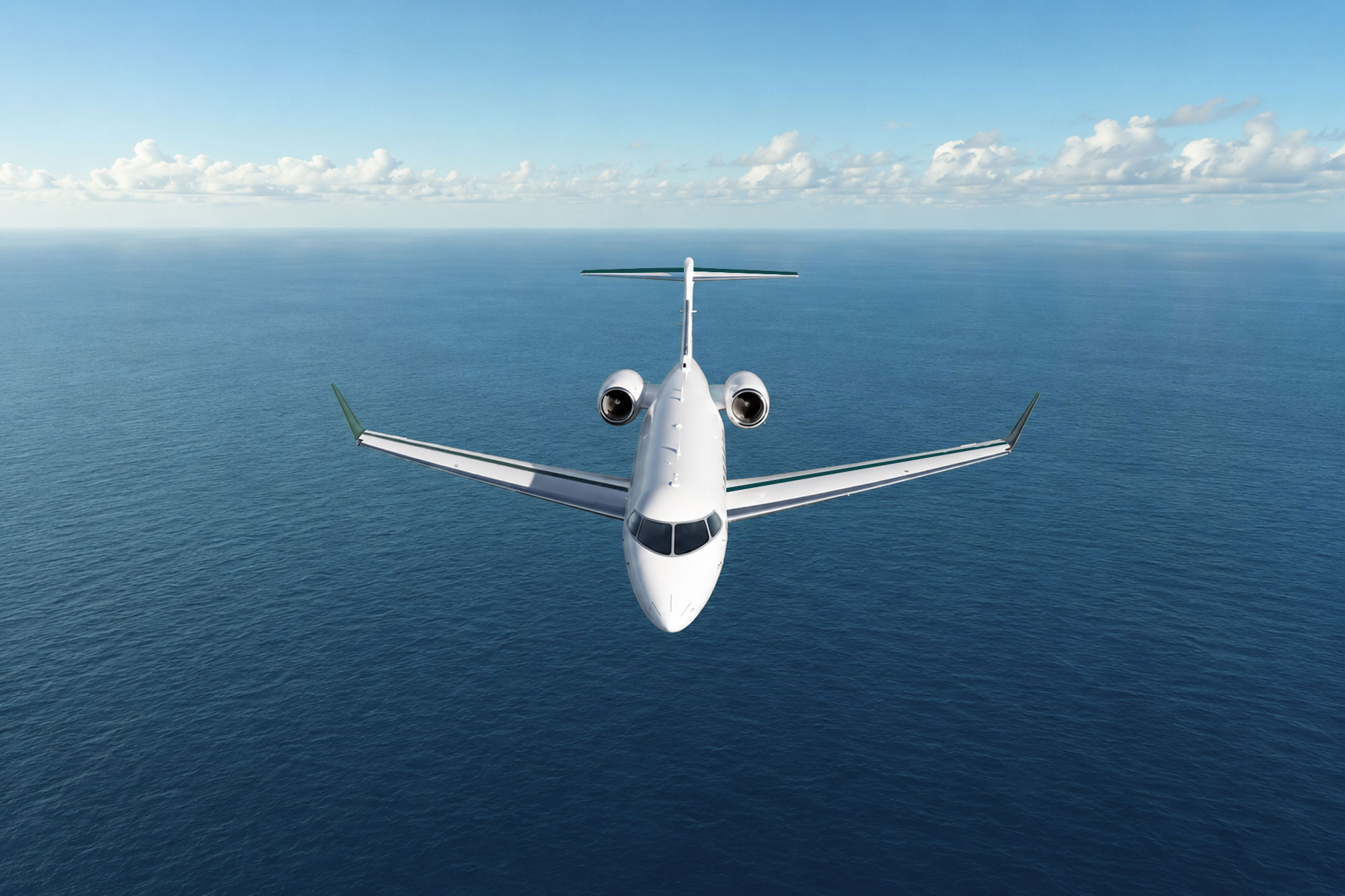
Same Type, New Variant
Difference training bridges a pilot from one variant of the Challenger 300 series to the next, covering the specific changes in systems, avionics, and procedures. It builds directly on the existing type rating, focusing on what is new rather than retraining the whole aircraft. Online ground school may be combined with Level D Full Flight Simulator sessions as required, and the course concludes once the pilot has demonstrated competence on the updated variant.
Course Details
-
Duration
Duration varies by path. The Challenger 300 to 350 differences training is an eLearning module of approximately 4.5 hours. Adding the autothrottle system fitted to the Challenger 3500 adds four hours of theoretical instruction and four hours of practical training on a Level D Full Flight Simulator. Reverse paths are short classroom sessions of roughly two hours.
-
Training topics
Difference training between the Challenger 300 and 350 focuses on the upgraded avionics introduced with the 350: modern flight management, performance computation, and synthetic vision. The course runs to around 11 hours of structured instruction, with special emphasis on the Smart Landing alerting function, LPV approaches, and the modern datalink and synthetic vision systems. Crews moving from the 350 down to the 300 complete a shorter session of around two hours covering flight instrument, navigation, and performance differences, ending with a knowledge exam at the 75% pass mark. Crews on autothrottle equipped variants complete a separate module covering the autothrottle system.
-
Ground School
Duration is short and largely delivered as eLearning rather than classroom for the Challenger 300 to Challenger 350 path, Challenger 350 to Challenger 300 path is a short classroom session of roughly 2 hours.
-
Simulator Training
Not required for most differences paths. Training that involves the autothrottle upgrade fitted to the Challenger 3500 requires four hours of practical training on a Level D Full Flight Simulator, delivered alongside four hours of theoretical instruction.
-
Skills Test
Not Applicable
-
Pre-requirements
The pre-requirement is that the pilot is qualified and current on the variant being departed from.
FAQs
-
Is the training accepted by EASA and the UK CAA?
Yes. AeronautX is an Approved Training Organisation under EASA, with parallel UK CAA approval. We develop our training courses in house, built around competence based training and assessment principles, and the data behind every simulator we operate has been generated using up to date modelling techniques and modern simulator technology. Both the courseware and the simulator qualifications are approved directly by the authorities, with no dependency on a manufacturer relationship. Every certificate we issue is accepted by EASA, the UK CAA, and the operators we work with.
-
How do your simulators compare to those at competing training centres?
Every simulator at our Amsterdam centre is a Level D Full Flight Simulator, the highest qualification level granted by EASA and recognised by the UK CAA. The devices are qualified to the same standard as every other Level D simulator of the same type in Europe, with no higher tier of fidelity, motion, or visual system available anywhere in the industry. What you fly with us is the same and high standard you fly anywhere else.
Enquire Now