October 10, 2026
GPS Spoofing — A Today Problem, Not Tomorrow’s
GPS spoofing is now one of business aviation’s most reported in-flight anomalies. Operators across Europe, the Middle East and North Africa report false positions, LNAV drops and GNSS loss.

GPS spoofing has moved from a niche concern to one of the most-reported in-flight anomalies in business aviation. EASA, the FAA and IATA have all issued bulletins in the last eighteen months covering interference clusters across Eastern Europe, the Black Sea, the eastern Mediterranean, the Middle East and parts of North Africa. Business jets transiting these regions are now routinely reporting false position drops, sudden velocity errors, the automatic disengagement of LNAV, spurious terrain and traffic alerts, and, in the most severe events, total loss of GNSS for periods long enough to require fall-back to inertial reference and ground-based aids.
The operational impact is significant. A typical business jet route from Western Europe to the Gulf or the Indian Ocean now crosses at least two spoofing-affected FIRs. Crews flying into these regions need to recognise the early signatures of spoofing — a position jump that the aircraft systems treat as real, dual-FMS disagreement, an abrupt time-since-departure error — and revert to robust cross-check techniques quickly enough to keep the flight safe and the aeroplane on its cleared track.
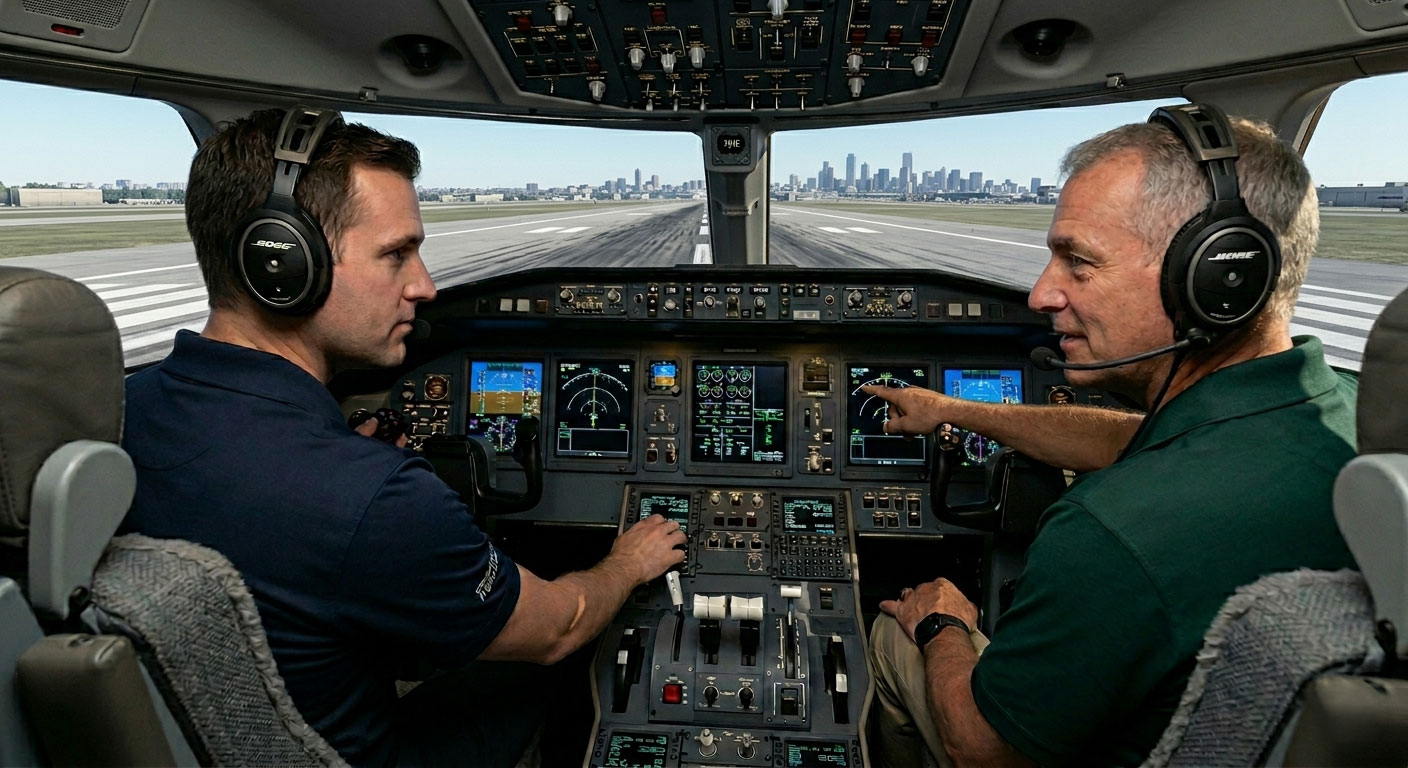
This is the kind of risk that does not lend itself to a textbook page. It needs scenario time. At AeronautX, GPS-spoofing events are being built into the LOFT scenarios delivered on our Level D simulators in Amsterdam, with operators able to layer their own route-specific exposure into the brief. Crews can rehearse the recognition, the cross-check discipline, and the FMS reversion in a setting that feels operationally real before they encounter it for real over the Black Sea.
The trend is not slowing. The training response should not either.